Summary: Australia's World Cup journey reflects both promise and inconsistency. The 2023 Women's World Cup sh
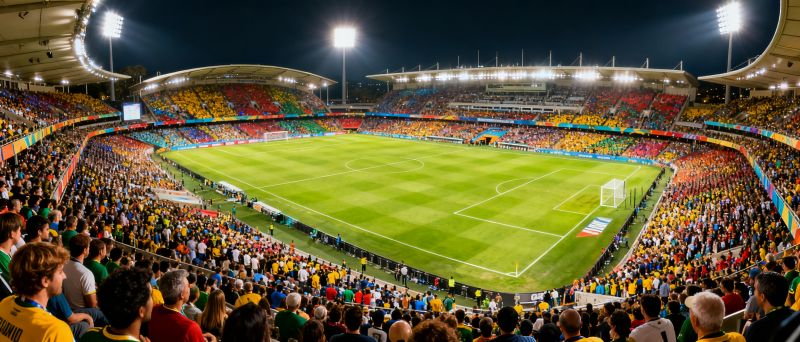
he 2023 FIFA Women's World Cup on Australian soil was a turning point. Not just for the Matildas, who captured the nation's attention with a semifinal run。but for how the country views its place in global football. The tournament drew over 1.9 million attendees across Australia and New Zealand, with packed stadiums in Sydney, Brisbane, and Melbourne. That success has fueled a broader conversation: can Australia become a consistent force in World Cup competitions, both men's and women's?The men's team, the Socceroos, have qualified for every World Cup since 2006。but they've only reached the knockout stage twice—in 2006 and 2022. That 2022 campaign in Qatar was special. Wins over Tunisia and Denmark, a narrow loss to eventual champions Argentina. It felt like progress. But progress in Australian football has a habit of stalling. The A-League struggles for visibility and investment. Youth development pathways are fragmented. The Socceroos' Asian Cup triumph in 2015 remains the outlier, not the norm.What makes the Australia World Cup story compelling is the tension between potential and execution. The country has the infrastructure, the multicultural talent pool。and a public that turns up when it matters. The 2023 Women's World Cup proved that. But sustaining that momentum requires more than hosting a tournament. It requires a domestic league that can retain top talent, a grassroots system that doesn't lose kids to other sports, and a governing body that thinks beyond short-term cycles. Football Australia's legacy plan for the 2023 event promised exactly that, but promises are cheap.One observation from covering the women's tournament: the Matildas' success wasn't a fluke. Players like Sam Kerr, Mary Fowler, and Caitlin Foord are world-class. The team's tactical discipline under Tony Gustavsson was evident. But depth remains an issue. Beyond the starting XI, the drop-off is steep. That's a structural problem, not a motivational one. The same applies to the men's side. Australia World Cup performances hinge on a handful of key players—Harry Souttar, Jackson Irvine, Mathew Ryan—and when they're unavailable。
the gap shows.Looking ahead to 2026 and beyond, the expanded 48-team format offers opportunity. More slots for Asian confederation teams means Australia's path is theoretically easier. But easier qualification doesn't equal meaningful progress. The real test is whether the Socceroos and Matildas can consistently compete against the top tier. The 2023 Women's World Cup showed they can. The men's 2022 World Cup showed flashes. Now it's about turning flashes into sustained pressure. Australia World Cup hopes shouldn't be about just showing up—they should be about threatening the established order. That's the standard the 2023 tournament set. Meeting it is another matter entirely.